
 Image 1 of 4
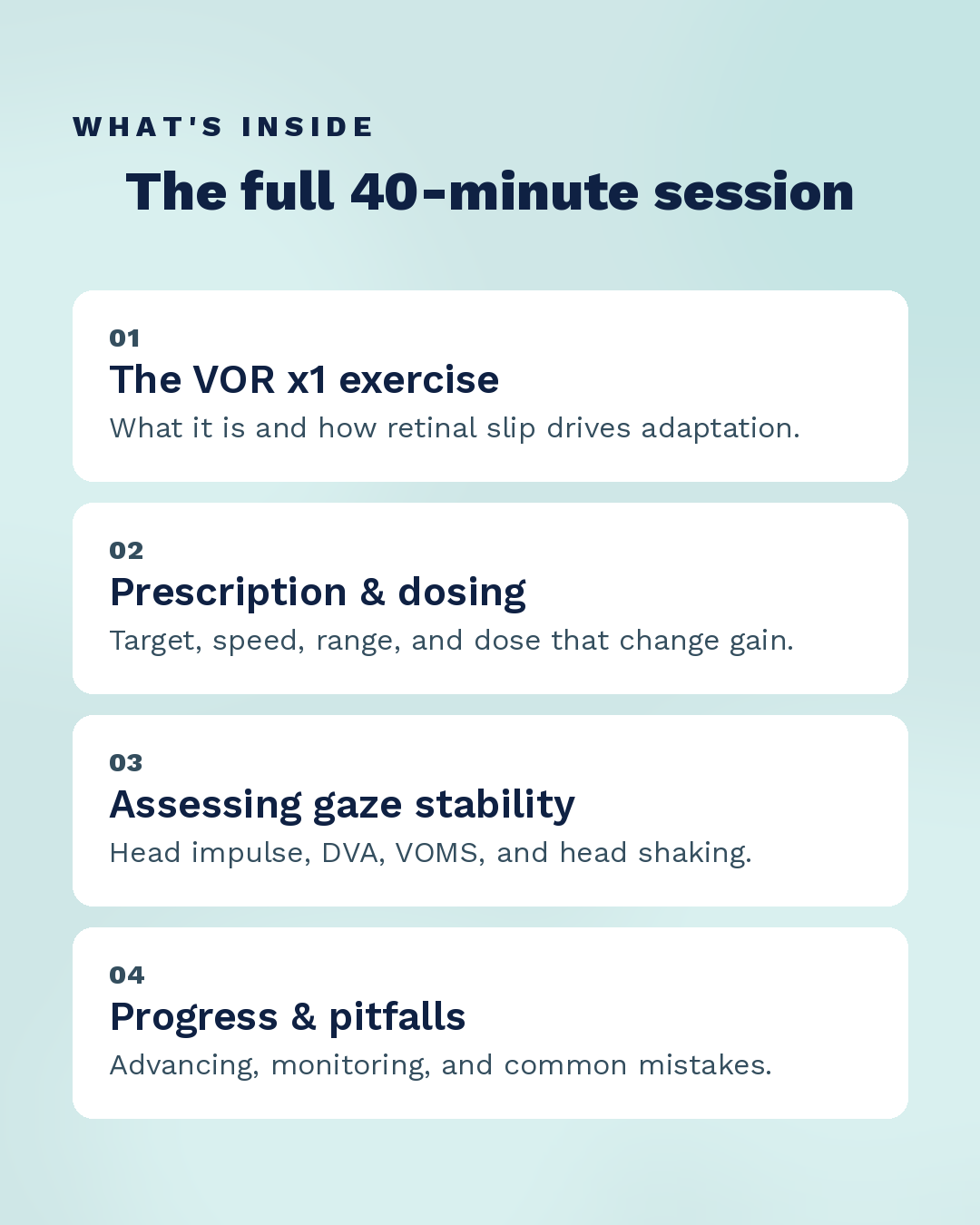 Image 2 of 4
 Image 3 of 4
 Image 4 of 4
In about 40 minutes, you'll learn what a VOR x1 exercise actually is and the adaptation mechanism behind it, how to prescribe it using real setup and dosing principles, how to assess gaze stability with a few clinical tests, and how to progress and monitor it while avoiding the common pitfalls. It's for physiotherapists, students, and any clinician who wants to feel confident the moment gaze instability shows up in their assessment.
After purchase, you'll get instant access to the recording, delivered straight to your inbox. It plays on any phone, tablet, or computer, requires no download, and is yours to revisit as often as you like.
What's inside:
The VOR x1 exercise: what it is and how retinal slip drives adaptation
Prescription and dosing: target, speed, range, and dose that actually change gain
Assessing gaze stability: head impulse, dynamic visual acuity, VOMS, and head shaking
Progressing and monitoring: how to advance, track change, and avoid common mistakes
In about 40 minutes, you'll learn what a VOR x1 exercise actually is and the adaptation mechanism behind it, how to prescribe it using real setup and dosing principles, how to assess gaze stability with a few clinical tests, and how to progress and monitor it while avoiding the common pitfalls. It's for physiotherapists, students, and any clinician who wants to feel confident the moment gaze instability shows up in their assessment.
After purchase, you'll get instant access to the recording, delivered straight to your inbox. It plays on any phone, tablet, or computer, requires no download, and is yours to revisit as often as you like.
What's inside:
The VOR x1 exercise: what it is and how retinal slip drives adaptation
Prescription and dosing: target, speed, range, and dose that actually change gain
Assessing gaze stability: head impulse, dynamic visual acuity, VOMS, and head shaking
Progressing and monitoring: how to advance, track change, and avoid common mistakes